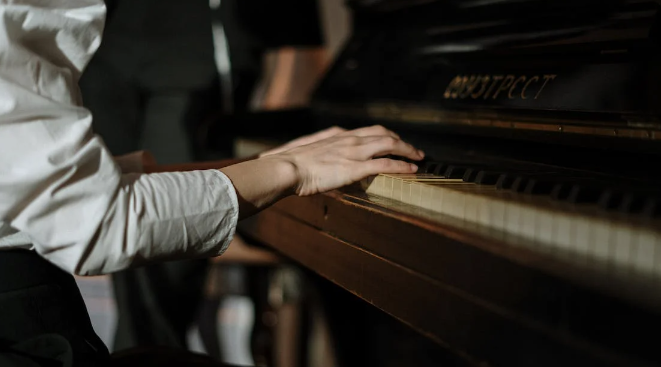
In the world of music, especially in modern times, technical mastery often gets the spotlight. Fast runs, complex jazz voicings, and virtuosic solos tend to draw the most attention. But in blues piano—especially when playing alongside other musicians—it’s not about showing off. It’s about feeling.
Blues is a genre born from deep human experience—pain, joy, struggle, celebration—and when you play it on the piano, especially in a group, your role isn’t to impress. It’s to connect. To tell a story. To contribute to a shared emotional experience. And that’s what makes emotional expression, not flashy technique, the heart of blues piano collaboration.
The Soul of the Blues: Simplicity That Speaks
Unlike classical or bebop jazz, the blues doesn’t demand technical fireworks. Its structure is simple—often a 12-bar progression—and its scales are straightforward. But within that simplicity lies infinite emotional depth.
A single, well-placed note with the right touch and timing can carry more weight than a flurry of thirty-second notes. Blues pianists like Otis Spann, Pinetop Perkins, and Ray Charles didn’t rely on flashy tricks. They used space, phrasing, and tone to make the piano speak.
When collaborating with other musicians, this approach becomes even more important. Your playing should never compete with others; it should connect with them—supporting, complementing, and enhancing the group’s emotional message.
Tone, Touch, and Timing: The Tools of Emotion
Emotional expression in blues piano comes down to three key elements:
1. Tone
The tone of a note is shaped by how you press the key. Soft touch brings warmth and subtlety, while a sharper attack adds grit and urgency. Blues pianists often vary their touch constantly—shifting from gentle, rolling chords in one moment to sharp, percussive stabs in the next.
When you’re playing with a band, your tone needs to match the mood. Is the guitarist playing a slow, soulful solo? Lay down smooth, mellow voicings. Is the vocalist delivering a gritty verse full of heartbreak? Add some edge to your tone.
2. Touch
The feel of each note—the weight, the sustain, the release—tells the listener something. A light, fluttering fill behind a singer might evoke vulnerability, while a thick, sustained chord might add power and drama.
Blues pianists often use their left hand to anchor the feel, playing rhythmic or rolling bass lines, while the right hand adds expressive melodic or harmonic color.
3. Timing
One of the most overlooked tools of emotional expression is timing. In blues, timing isn’t just about keeping time—it’s about using space. Sometimes, it’s the note you don’t play that makes the phrase feel alive.
Dragging just behind the beat can add a laid-back, mournful quality. Hitting the beat hard and ahead of time can create urgency or excitement. When collaborating, your sense of timing must match the band. If the drummer eases into a slow shuffle, you don’t fight it—you settle into it, breathe with it, and play with intention.
The Power of Restraint in Group Playing
One of the hallmarks of emotionally expressive blues pianists is knowing when not to play. Silence creates contrast. It gives listeners time to absorb what just happened. It gives space to other musicians to express themselves.
This kind of restraint is a sign of musical maturity. You’re not in a race to fill every second with sound. You’re trying to tell a story—and sometimes, that means stepping back and letting others speak.
In a blues band setting:
- During a guitar solo, you might just play soft chords behind the beat.
- When a vocalist is delivering an emotional line, you might leave an entire bar silent, then respond with a delicate fill after the phrase ends.
- If the bassist drops out for dramatic effect, you might bring in a walking bass line on your left hand to support the groove subtly.
This kind of emotional awareness requires listening and sensitivity. It’s not about being the star. It’s about serving the song.
Emotion Through Interaction: How Feelings Are Shared in Collaboration
Blues is, at its heart, a communal genre. It’s about shared experience—between the musicians, and between the band and the audience. Every player contributes to the mood. The pianist doesn’t play in isolation; they respond to what’s happening around them.
Call and Response with Emotion
In many blues settings, you’ll find musicians engaging in call-and-response—not just musically, but emotionally. A guitarist might bend a note that sounds like a cry, and you might respond with a moody chord or a rising lick on the high register. It’s a conversation built on feeling.
Matching Energy Levels
If the band is building energy, you don’t want to hold back so much that it dulls the vibe. On the other hand, if the group is pulling back, a loud piano solo would break the mood. Emotional intelligence helps you adjust your playing in real time.
Storytelling with Others
One of the most beautiful things about blues collaboration is collective storytelling. Everyone contributes a verse to the musical narrative. You might start with a mellow intro, the guitarist picks up with a solo, the drummer adds tension, and then you return with a piano phrase that brings it all home.
Letting Go of Ego: Playing for the Song
Perhaps the biggest lesson for blues pianists who want to collaborate meaningfully is this: Let go of your ego. You don’t have to prove anything. You don’t need to impress anyone with speed, complexity, or volume.
If your playing helps the band sound better—if it moves the audience—then you’ve done your job. That might mean repeating a simple riff for three minutes. It might mean comping gently for most of the tune and only taking a solo at the very end. It might even mean not playing at all during a stripped-down section.
The focus should always be on the song, the emotion, and the collective experience. That’s where the real magic lives.
Practice Feeling, Not Just Fingers
While technical practice is important, blues pianists should also practice feeling. This means:
- Listening to legendary blues players and absorbing their phrasing and dynamics
- Playing along with recordings and focusing on how the piano interacts with the band
- Jamming with other musicians and learning to adapt your playing in real time
- Improvising with emotion in mind—try playing a sad phrase, then a joyful one, using the same notes but different phrasing and dynamics
Playing with Heart Over Hands
In blues piano collaboration, how you play is always more important than what you play. It’s not about playing fast—it’s about playing real. Blues is a music of honesty, and when you bring that honesty into your collaborations, the result is powerful.
Emotion speaks louder than technique. Feelings linger longer than flashy solos. And when everyone in the band plays with heart, the music doesn’t just entertain—it moves people.
So the next time you sit down at the piano with other musicians, ask yourself not, “What lick should I play?” but rather, “What does this moment feel like—and how can I add to it?”
That’s the blues. That’s the magic. And that’s the art of playing with feeling over flash.
The written content on this page was generated by perplexity.ai