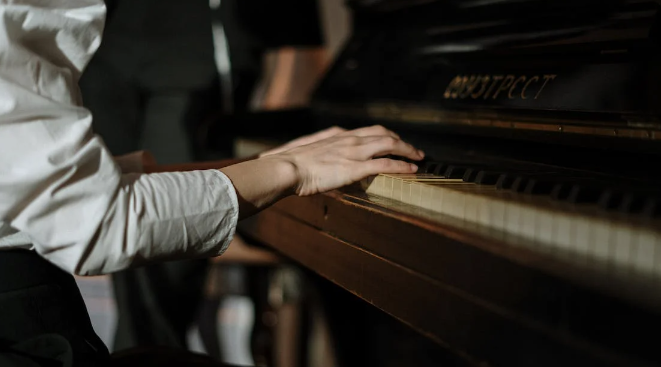
Playing the blues on the piano is an experience deeply rooted in emotion, tradition, and most importantly, communication. Unlike genres that emphasize rigid structure or heavy arrangement, the blues thrives on spontaneity and mutual understanding. When blues pianists play with other musicians—be it a guitarist, bassist, drummer, or vocalist—they’re not simply performing alongside them. They’re engaging in a musical conversation.
This conversation is not carried out with words but through rhythm, phrasing, dynamics, and feel. The pianist listens as much as they play, responding to subtle cues from the band, supporting the soloist, and weaving their own voice into the collective sound. Mastering this art of musical conversation is what transforms a blues pianist from a player into a true collaborator.
The Role of the Pianist in the Blues Ensemble
The piano occupies a unique space in blues music. It can act as a rhythmic engine, a melodic storyteller, or a harmonic cushion. It complements both the rhythm section and the soloists, providing texture and energy to the overall groove. But unlike lead instruments like the guitar or harmonica, the pianist often takes a more flexible role—supporting, filling gaps, and stepping into the spotlight when needed.
A great blues pianist knows when to push and when to hold back. They understand that their job is not only to shine, but also to help others shine.
Listening: The Foundation of Connection
The first key to musical conversation is listening. Too often, inexperienced players focus solely on what they plan to play, rather than tuning into what’s happening around them. In blues, the best moments often come from reacting in real time to what another musician has played.
For example, a guitarist might end a phrase with a sliding bend that leaves space at the end of the measure. A sensitive pianist might respond with a soft turnaround or echo the motif on a higher octave. This back-and-forth—like a dialogue—adds depth and emotion to the performance.
Listening also helps pianists sync with the drummer’s feel, catch the bassist’s groove, and support a vocalist’s phrasing. When everyone is listening, the entire band breathes together.
Call and Response: Building Conversations in Real Time
One of the oldest traditions in blues—and African-American music more broadly—is the concept of call and response. This is where one instrument or voice plays a phrase (the “call”), and another replies (the “response”). On the piano, this might look like:
- Playing a short phrase after a vocalist finishes a line
- Echoing or varying a guitar lick
- Answering a saxophone solo with a rhythmic riff
Call and response isn’t about copying. It’s about acknowledgment—musically saying, “I hear you,” and then adding to the conversation.
This dynamic keeps the music alive and unpredictable. It allows each player to contribute their perspective while staying connected to the group narrative.
Comping: Supporting Without Overshadowing
In many blues settings, especially during a solo or vocal verse, pianists “comp”—a shorthand for accompany. Comping involves playing rhythmically and harmonically supportive figures that keep the groove moving without stealing the spotlight.
Effective comping is:
- Rhythmically aware: locking in with the drummer’s snare or hi-hat
- Harmonically clear: outlining the chord changes simply and cleanly
- Dynamic: adjusting volume and intensity based on what’s happening
Great comping is subtle and respectful. It’s the musical equivalent of nodding along while someone else tells a story—letting them know you’re with them every step of the way.
Understanding the Rhythm Section
A pianist’s closest allies in the band are the drummer and bassist. These three musicians form the rhythmic and harmonic foundation of the blues.
- The bass sets the root movement and groove. Pianists should avoid clashing by staying out of the low register when the bassist is active.
- The drummer sets the time feel. Whether it’s a slow shuffle, a swinging groove, or a funky backbeat, pianists must lock into the rhythm and complement it—perhaps with left-hand riffs or syncopated right-hand patterns.
The piano’s rhythmic role is flexible. It can reinforce the beat or add contrast with off-beat stabs, syncopation, or silence.
Knowing When to Speak—and When to Stay Quiet
One of the most mature skills a blues pianist can develop is knowing when not to play. Silence can be as powerful as sound. Leaving space allows other instruments to breathe and gives the audience time to absorb what’s just been played.
Restraint shows confidence. It says: I don’t have to fill every second. I trust the music. This kind of musical maturity turns good bands into great ones.
Adapting to the Moment
Every performance, jam, or studio session has its own mood. A pianist who can read the room—and the band—is an invaluable asset. Maybe the guitarist is feeling fiery and wants to stretch out. Maybe the vocalist is telling a heartbreak story and needs gentle support. Maybe the drummer slows things down for a moody swing.
As a pianist, adaptability is your superpower. Learn to:
- Shift dynamics in real time
- Alter your voicings to suit the feel
- Choose appropriate licks and fills for the emotional context
Your flexibility helps the band sound cohesive, even when navigating spontaneous musical turns.
Soloing as a Storyteller
When it’s your turn to solo, the conversation continues—but now you lead it. Blues solos aren’t about speed or complexity—they’re about telling a story. You can begin with a simple motif, develop it over several bars, and build tension by climbing registers, increasing rhythm, or using dynamics.
Your solo should connect with what came before and set the stage for what comes next. Stay aware of the band, feed off their energy, and remember: you’re still part of the conversation.
Conversation Over Competition
At its heart, blues piano is about connection. It’s about empathy, support, expression, and shared experience. The most moving blues performances aren’t those with the flashiest chops, but those where every player listens and contributes with honesty.
The art of musical conversation transforms a group of musicians into a band—a unit that breathes together, grooves together, and tells stories together.
So, the next time you sit behind the keys with a blues band, don’t just think about what to play. Think about what others are saying, and how your voice can add something meaningful to the story. That’s where the magic of the blues truly lives.
The written content on this page was generated by perplexity.ai