Tag Archives: blue pianos

Can you name some famous songs that prominently feature the blue piano

The blues piano is an instrument that has played a significant role in the development of blues music. It is a musical instrument that has been used by many great blues musicians to create some of the most iconic blues songs of all time. Here are some famous songs that prominently feature the blue piano.

Blueberry Hill – Fats Domino

“Blueberry Hill” is a classic blues song written by Vincent Rose, Al Lewis, and Larry Stock. The song was first recorded in 1940, but it was Fats Domino’s rendition of the song that made it famous. The song features a prominent blues piano riff that is instantly recognizable. The piano riff is played throughout the song and is one of the most memorable parts of the song. “Blueberry Hill” is considered one of Fats Domino’s greatest hits and is a classic example of blues music that prominently features the blue piano.

Ain’t Misbehavin’ – Fats Waller

“Ain’t Misbehavin'” is a classic blues song written by Fats Waller and Harry Brooks. The song was first recorded in 1929 and has been covered by many great artists over the years. The song features a prominent blues piano riff that is played throughout the song. Fats Waller’s piano playing is masterful, and the piano riff in “Ain’t Misbehavin'” is one of the most famous in all of blues music.

Georgia on My Mind – Ray Charles

“Georgia on My Mind” is a classic blues song written by Hoagy Carmichael and Stuart Gorrell. The song was first recorded in 1930 and has been covered by many great artists over the years. Ray Charles’ rendition of the song is one of the most famous, and it features a prominent blues piano riff that is played throughout the song. The piano riff in “Georgia on My Mind” is one of the most recognizable in all of blues music and is a testament to Ray Charles’ mastery of the blues piano.

Worried Life Blues – Big Maceo

“Worried Life Blues” is a classic blues song written by Major “Big Maceo” Merriweather. The song was first recorded in 1941 and features Big Maceo on the piano. The song is a classic example of blues music that prominently features the blue piano. Big Maceo’s piano playing is masterful, and the piano riff in “Worried Life Blues” is one of the most famous in all of blues music.

I Can’t Quit You Baby – Willie Dixon

“I Can’t Quit You Baby” is a classic blues song written by Willie Dixon. The song was first recorded in 1957 and has been covered by many great artists over the years. The song features a prominent blues piano riff that is played throughout the song. Willie Dixon’s piano playing is masterful, and the piano riff in “I Can’t Quit You Baby” is one of the most famous in all of blues music.

Sinner’s Prayer – Ray Charles

“Sinner’s Prayer” is a classic blues song written by Lowell Fulson and Lloyd Glenn. The song was first recorded in 1949 and has been covered by many great artists over the years. Ray Charles’ rendition of the song features a prominent blues piano riff that is played throughout the song. The piano riff in “Sinner’s Prayer” is one of the most recognizable in all of blues music and is a testament to Ray Charles’ mastery of the blues piano.

Blue Monday – Fats Domino

“Blue Monday” is a classic blues song written by Fats Domino and Dave Bartholomew. The song was first recorded in 1956 and features a prominent blues piano riff that is played throughout the song.
How has the blue piano playing style influenced other genres of music, such as jazz and rock and roll

The blue piano playing style is one of the most distinctive and influential musical genres of the 20th century. Originating from the African American communities in the southern United States, this genre was characterized by its soulful and emotional playing style, often accompanied by deep and meaningful lyrics. The blue piano playing style has influenced a wide range of other genres, including jazz and rock and roll, and its legacy can still be heard in contemporary music today.

The blue piano playing style emerged in the late 19th and early 20th century as a result of the social and cultural conditions of the time. African Americans in the southern United States were facing significant discrimination and oppression, and music became a powerful form of expression for them. The piano was particularly popular as it was an affordable and portable instrument that could be played in a variety of settings, from homes to juke joints.

The blue piano playing style was characterized by its use of the 12-bar blues chord progression, which became a standard in the genre. The pianist would often play a repeating pattern of chords, while the vocalist would sing over the top of them. The playing style was also characterized by its use of syncopation, where notes are played off the beat, and the use of blue notes, which are flattened or bent notes that give the music a distinctive, mournful sound.

One of the most significant ways that the blue piano playing style influenced other genres was through its influence on jazz. Jazz musicians in the 1920s and 1930s often incorporated blue piano playing into their music, particularly in the form of blues-influenced improvisation. Jazz pianists such as Duke Ellington and Art Tatum were particularly influenced by the blue piano playing style, and their music often featured the same 12-bar blues chord progression and use of syncopation.

The influence of the blue piano playing style on jazz continued into the 1940s and 1950s with the emergence of bebop. Bebop was a style of jazz that emphasized fast, complex improvisation and was characterized by its use of dissonant harmonies and unconventional chord progressions. While bebop was a departure from the traditional blues-based jazz, it still retained many elements of the blue piano playing style, particularly its use of syncopation and rhythmic complexity.

The blue piano playing style also had a significant influence on rock and roll, particularly in its early years. The origins of rock and roll can be traced back to the 1950s, when African American musicians such as Chuck Berry and Little Richard were creating music that blended elements of blues, country, and R&B. Many of these early rock and roll songs featured the same 12-bar blues chord progression and use of syncopation as the blue piano playing style.

One of the most significant ways that the blue piano playing style influenced rock and roll was through its use of the piano. While the guitar is often considered the defining instrument of rock and roll, the piano played an important role in the early years of the genre. Many of the most iconic rock and roll songs of the 1950s, such as “Great Balls of Fire” by Jerry Lee Lewis and “Rock Around the Clock” by Bill Haley and His Comets, featured prominent piano parts that were heavily influenced by the blue piano playing style.

The influence of the blue piano playing style can still be heard in contemporary music today. While the genre itself may not be as popular as it once was, its legacy continues to be felt in a wide range of musical styles. Jazz pianists such as Herbie Hancock and Chick Corea continue to incorporate elements of the blue piano playing style into their music, while rock and roll bands such as The Black Keys and The White Stripes have been heavily influenced by the genre.

What are some of the defining characteristics of the blues style of piano playing

The blues style of piano playing is a unique and powerful art form that has its roots in African-American musical traditions. It emerged in the early 20th century and quickly became one of the most popular forms of music in America. The blues style of piano playing is characterized by its use of specific techniques and patterns that give it its distinctive sound. In this article, we will explore some of the defining characteristics of the blues style of piano playing.

One of the most important characteristics of the blues style of piano playing is the use of a specific chord progression. The typical blues chord progression is based on a 12-bar pattern that consists of three four-bar segments. The first four bars are played with the tonic chord, the next two bars are played with the subdominant chord, and the final four bars are played with the dominant chord. This chord progression is used in almost all blues songs, and it gives the music its distinctive sound.

Another defining characteristic of the blues style of piano playing is the use of the blues scale. The blues scale is a pentatonic scale that has an added “blue” note. The blue note is a flattened third or fifth note in the scale, and it is used to create the characteristic “bluesy” sound. The blues scale is used extensively in blues piano playing, and it is an essential element of the blues style.

The use of bluesy rhythms is also a defining characteristic of the blues style of piano playing. Blues rhythms are typically slow and laid back, with a lot of space between the notes. The rhythm is often syncopated, which means that the emphasis is on the offbeat rather than the downbeat. This creates a feeling of tension and release that is central to the blues style.

In addition to these specific techniques and patterns, the blues style of piano playing is also characterized by its improvisational nature. Improvisation is a key element of blues music, and it allows the performer to express themselves in a unique and personal way. In blues piano playing, improvisation is often based on the use of licks and riffs. A lick is a short musical phrase that is used repeatedly, while a riff is a longer musical idea that is developed and expanded upon. These improvisational elements allow the performer to create their own unique version of a blues song.

Finally, the blues style of piano playing is characterized by its emotional depth and intensity. Blues music is often associated with themes of sadness, heartbreak, and loss, and the piano is particularly effective at conveying these emotions. The slow, mournful melodies and soulful improvisations of blues piano playing can evoke powerful emotions in the listener and create a deep connection between performer and audience.

In the blues style of piano playing is a unique and powerful art form that is characterized by specific techniques, patterns, and improvisational elements. The use of a specific chord progression, the blues scale, and bluesy rhythms create the distinctive sound of blues piano playing, while improvisation allows the performer to express themselves in a personal and unique way. The emotional depth and intensity of blues music are particularly effective when played on the piano, making the blues style of piano playing one of the most powerful and evocative forms of music.

Who is considered to be the most famous blue piano player of all time

Who is considered to be the most famous blue piano player of all time?

The blues is a music genre that originated in the African-American communities of the Southern United States in the late 19th and early 20th centuries. It is characterized by its 12-bar structure, soulful lyrics, and melancholic melodies. One of the most distinctive features of the blues is the use of the piano as a lead instrument, creating a unique sound that is both haunting and uplifting.

Over the years, there have been many great blues pianists who have left their mark on the genre, but none are more famous than W.C. Handy, also known as the Father of the Blues.

Born on November 16, 1873, in Florence, Alabama, Handy was a composer, musician, and bandleader who was instrumental in popularizing the blues. He was the son of a pastor and grew up in a musical family. He learned to play the cornet and other instruments as a child and eventually became a skilled pianist.

Handy was one of the first musicians to notate the blues, which until then had been an oral tradition passed down from generation to generation. He was also one of the first to publish blues sheet music, which helped to bring the music to a wider audience. One of his most famous compositions is “St. Louis Blues,” which was published in 1914 and became an instant hit.

Handy’s influence on the blues cannot be overstated. He helped to establish the genre as a legitimate form of music and paved the way for future blues musicians. He was also a gifted performer and bandleader who toured extensively throughout the United States and Europe.

Despite his many accomplishments, Handy faced many challenges in his life. He grew up in the segregated South and faced racism and discrimination throughout his career. He also struggled with financial difficulties and health problems. However, he never gave up on his music and continued to perform and compose until his death on March 28, 1958.

Handy’s legacy lives on today, and his influence can be heard in the music of many contemporary blues pianists. His pioneering efforts helped to shape the blues into the vibrant and influential genre that it is today.

While Handy may be considered the most famous blues pianist of all time, there are many other great musicians who have left their mark on the genre. Some of the other notable blues pianists include Pinetop Perkins, Otis Spann, Memphis Slim, and Ray Charles.

Pinetop Perkins was born on July 7, 1913, in Belzoni, Mississippi, and began playing the piano at a young age. He worked with some of the greatest blues musicians of his time, including Sonny Boy Williamson and Muddy Waters, and was known for his energetic playing style.

Otis Spann was born on March 21, 1930, in Jackson, Mississippi, and grew up playing in church. He was a member of Muddy Waters’ band for many years and played on some of his most famous recordings.

Memphis Slim was born on September 3, 1915, in Memphis, Tennessee, and began playing the piano at a young age. He moved to Chicago in the 1930s and became a part of the city’s thriving blues scene. He was known for his smooth playing style and powerful vocals.

Ray Charles was born on September 23, 1930, in Albany, Georgia, and was one of the most influential musicians of the 20th century. He was a gifted pianist and singer who blended elements of blues, gospel, and jazz into his music. He had a string of hits throughout the 1950s and 1960s and was known for his soulful voice and powerful stage presence.

How have modern blues pianists continued to innovate and push the boundaries of the genre in recent years

Back View Photo of a Man Playing a Black Grand Piano

How have modern blues pianists continued to innovate and push the boundaries of the genre in recent years?

The blues is a genre that has been around for over a century and has seen numerous transformations over time. One aspect of the blues that has undergone a significant change in recent years is the role of the piano. Modern blues pianists have been pushing the boundaries of the genre by infusing it with new sounds and techniques, creating a unique and fresh take on an old classic.

One of the most notable innovations in modern blues piano is the use of technology. With the advent of electronic keyboards and synthesizers, blues pianists can now create sounds that were once impossible with traditional instruments. They can use digital effects to manipulate the tone and texture of their playing, giving them a more varied palette to work with.

In addition to technology, modern blues pianists have also been incorporating other musical genres into their playing. Jazz, rock, and funk are just a few of the styles that have influenced contemporary blues piano. This blending of genres has resulted in a more diverse and exciting sound, with pianists creating new and interesting compositions that reflect their individual influences.

Another way modern blues pianists have been pushing the genre forward is through their use of unconventional techniques. Players like Ben Folds and Jon Cleary have incorporated elements of classical piano into their blues playing, resulting in a more complex and sophisticated sound. Others, like Jools Holland, have experimented with using two pianos at once, creating a unique and intricate dueling sound.

Beyond technical innovations, modern blues pianists have also been expanding the subject matter of their music. While traditional blues often focused on themes of heartbreak and loss, contemporary blues piano is exploring a wider range of emotions and experiences. Artists like Allen Toussaint and Dr. John have used their music to address political and social issues, while others like James Booker have explored more personal and introspective themes.

Perhaps most importantly, modern blues pianists have continued to keep the blues alive by passing on their knowledge and expertise to the next generation of musicians. Many contemporary players have taken on the role of teachers, passing on their skills and techniques to up-and-coming pianists. This has resulted in a growing community of young musicians who are keeping the blues alive and pushing it forward into new and exciting territory.

Modern blues pianists have continued to innovate and push the boundaries of the genre in recent years by incorporating new technologies, blending genres, using unconventional techniques, and expanding the subject matter of their music. These innovations have resulted in a fresh and exciting take on an old classic, ensuring that the blues will continue to be a vibrant and evolving genre for years to come

How did the migration of African Americans from the rural South to urban centers like Chicago and Detroit impact the development of blues piano in the mid-20th century

How did the migration of African Americans from the rural South to urban centers like Chicago and Detroit impact the development of blues piano in the mid-20th century?

The Great Migration of African Americans from the rural South to urban centers in the mid-20th century had a significant impact on the development of blues piano. As they settled in cities like Chicago and Detroit, African Americans brought with them their rich musical traditions, which fused with the styles of other cultures and the urban environment to create a new sound.

The blues piano is a style of music that originated in the African American community in the early 20th century. It is characterized by its use of the piano as the primary instrument, and its focus on expressing the emotions and experiences of the performer. The style developed out of a fusion of African rhythms, gospel music, and the European classical tradition.

The migration of African Americans from the rural South to urban centers like Chicago and Detroit began in the early 1900s and continued through the mid-1960s. It was driven by a variety of factors, including the search for better economic opportunities and the desire to escape the racism and violence of the Jim Crow South. As African Americans settled in these cities, they brought with them their rich musical traditions, which had been passed down through generations.

In Chicago, the blues piano was popularized by musicians such as Roosevelt Sykes and Big Maceo Merriweather. These musicians combined the traditional blues style with the city’s urban rhythms to create a new sound that was both unique and familiar. They played in local clubs and bars, often improvising their music and incorporating new elements as they went along.

The development of blues piano in Detroit was similarly influenced by the city’s unique musical environment. Detroit was home to a thriving jazz scene, and musicians such as Earl Hines and Albert Ammons incorporated jazz elements into their blues piano playing. The result was a style of music that was more complex and sophisticated than traditional blues piano, but still retained its emotional intensity.

One of the most influential blues pianists of the mid-20th century was Muddy Waters, who moved to Chicago in the 1940s. Waters’ music combined the traditional blues style with the urban rhythms of Chicago, and his lyrics often focused on the experiences of African Americans in the city. His music was both a reflection of the city’s culture and a commentary on the social and political issues of the time.

The migration of African Americans to urban centers also had a significant impact on the way that blues piano was performed. In the rural South, the piano was often played in a solo or duo setting, with one musician playing the melody and another playing the accompaniment. In the urban centers, however, the piano was often part of a larger ensemble, which included other instruments such as the guitar and drums. This allowed for a greater variety of sounds and textures, and gave blues piano a more dynamic and complex feel.

The development of blues piano in the mid-20th century was also influenced by advances in technology. The advent of the electric piano and amplification allowed for a greater range of sounds and volumes, which further expanded the possibilities of the genre. Musicians could now experiment with different tones and effects, and the piano could be heard more clearly in larger venues.

The migration of African Americans from the rural South to urban centers like Chicago and Detroit had a profound impact on the development of blues piano in the mid-20th century. African Americans brought with them their rich musical traditions, which fused with the styles of other cultures and the urban environment to create a new sound. The blues piano became more complex and sophisticated, and was often part of a larger ensemble. Advances in technology also played a role in the development of the genre. Today, the blues piano continues to be a vital part of American music, and its influence can be heard in a wide variety of genres

What role did the piano play in the development and evolution of blues music in the United States

What role did the piano play in the development and evolution of blues music in the United States?

The piano has played an important role in the development and evolution of blues music in the United States. Blues music, which originated in African American communities in the late 19th century, has been characterized by its distinct sound, which is often achieved through the use of specific instruments, including the piano. In this article, we will explore the role of the piano in the development and evolution of blues music in the United States.

The piano has been a part of blues music since its early days. It was initially used as a substitute for the guitar, which was not widely available to African American musicians in the early 20th century. The piano provided a way for these musicians to accompany their vocals and create a full sound, despite not having access to a guitar or other stringed instruments.

The piano also allowed for greater musical experimentation and complexity in blues music. With its wide range of notes and ability to produce both melodic and rhythmic sounds, the piano allowed musicians to create complex and varied blues arrangements. This led to the development of a new style of blues piano playing, which involved intricate chord progressions, syncopated rhythms, and virtuosic improvisation.

One of the earliest and most influential blues pianists was Jelly Roll Morton, who began playing in the early 20th century. Morton’s playing was characterized by its sophisticated harmonies and syncopated rhythms, which helped to establish the piano as a key instrument in blues music. Other early blues pianists included Blind Lemon Jefferson, Leroy Carr, and Roosevelt Sykes, who all helped to further develop the style of blues piano playing.

As blues music evolved throughout the 20th century, the piano continued to play an important role. In the 1920s and 1930s, the piano was often featured in blues bands, which also included guitars, drums, and horns. This led to the development of a new style of blues music, known as boogie-woogie, which was characterized by its driving rhythms and fast tempos. Boogie-woogie piano players, such as Albert Ammons and Meade Lux Lewis, became hugely popular and influential in the 1930s and 1940s.

In the post-World War II era, blues music continued to evolve and change, with new styles such as jump blues and Chicago blues emerging. The piano remained a key instrument in these styles, with musicians such as Otis Spann and Memphis Slim playing a major role in their development.

In addition to being a key instrument in blues music, the piano has also influenced other genres of music, including jazz and rock and roll. Many famous musicians, including Ray Charles and Jerry Lee Lewis, began their careers as blues pianists before branching out into other styles of music.

Despite the many changes that have occurred in blues music over the years, the piano has remained a constant presence. Its versatility and range have allowed it to adapt to new styles and trends, while still retaining its essential role in the sound of blues music.

The piano has played a crucial role in the development and evolution of blues music in the United States. From its early days as a substitute for the guitar, to its central role in the development of boogie-woogie and other styles, the piano has helped to create the distinct sound of blues music. Its versatility and adaptability have ensured that it remains an essential instrument in blues music to this day.

Who were some of the most notable blues pianists in the early days of the genre, and how did their styles differ from one another

The blues genre, with its origins in African American culture, has a long and rich history. The piano has been a crucial instrument in the development of the blues, and many notable pianists have contributed to the genre’s evolution. In this article, we will look at some of the most notable blues pianists from the early days of the genre, and explore how their styles differed from one another.

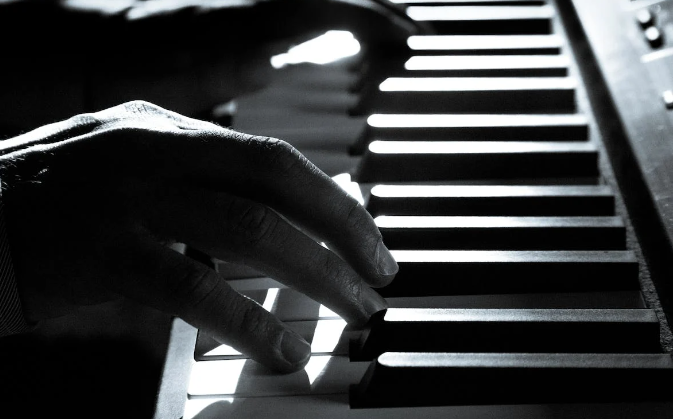
Grayscale Photo of Person Playing Piano

Jelly Roll Morton

Jelly Roll Morton is considered by many to be the first true composer and arranger of jazz and blues. He was a master pianist, known for his unique style of “Spanish tinge,” which blended elements of blues, ragtime, and Latin music. Morton’s playing was characterized by his use of intricate rhythms, elaborate melodies, and colorful harmonies. He was also a prolific composer, and his songs are still performed and recorded today.

Willie “The Lion” Smith

Willie “The Lion” Smith was another influential blues pianist who emerged in the early days of the genre. He was known for his lively and upbeat style, which was characterized by his use of fast tempos, syncopated rhythms, and intricate chord progressions. Smith’s playing was also notable for its strong sense of swing and improvisation, which made him a favorite among both jazz and blues audiences.

Pinetop Smith

Pinetop Smith was a blues pianist who rose to fame in the 1920s and 1930s. He was known for his boogie-woogie style, which was characterized by its driving rhythms, repetitive bass lines, and use of blues scales. Smith’s playing was also notable for its use of call-and-response patterns, which allowed him to interact with the audience and create a sense of energy and excitement.

Memphis Slim

Memphis Slim was a blues pianist who gained fame in the 1940s and 1950s. He was known for his sophisticated and polished style, which was characterized by his use of smooth and flowing melodies, intricate harmonies, and sophisticated chord progressions. Slim’s playing was also notable for its use of dynamics, which allowed him to create a range of emotions and moods in his music.

Otis Spann

Otis Spann was a blues pianist who played with many of the great blues musicians of the 1950s and 1960s. He was known for his soulful and expressive style, which was characterized by his use of blues scales, gospel-inspired chord progressions, and emotional phrasing. Spann’s playing was also notable for its use of dynamics and his ability to create a sense of tension and release in his music.

Fats Domino

Fats Domino was a New Orleans pianist who was one of the most successful blues musicians of the 1950s and 1960s. He was known for his catchy and upbeat style, which was characterized by his use of simple chord progressions, infectious rhythms, and catchy melodies. Domino’s playing was also notable for its use of Latin rhythms, which gave his music a unique flavor and helped to popularize the blues genre around the world.

Professor Longhair

Professor Longhair was a New Orleans blues pianist who emerged in the 1940s and 1950s. He was known for his funky and syncopated style, which was characterized by his use of complex rhythms, funky bass lines, and jazzy harmonies. Longhair’s playing was also notable for his use of dynamics and his ability to create a sense of groove and swing in his music.

How to start playing blues on the piano

Blues music is an incredibly expressive genre that has a unique sound and feel. Playing blues on the piano can be a great way to express yourself musically and explore the nuances of this genre. In this guide, we’ll take a look at some tips and techniques for getting started with playing blues on the piano.

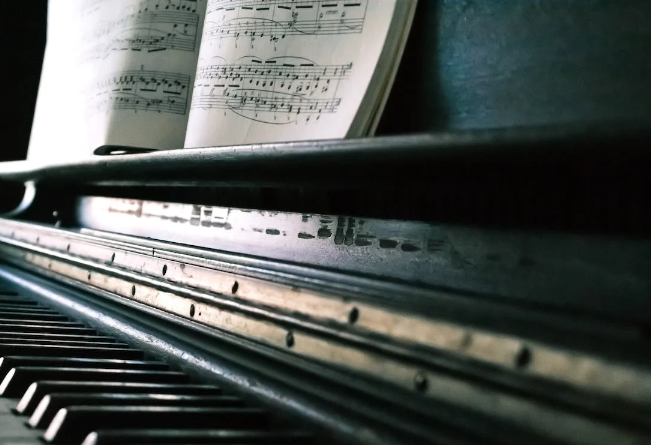
Music Sheet on Black Piano

Learn the Blues Scale
The first step to playing blues on the piano is to learn the blues scale. The blues scale is a six-note scale that is used extensively in blues music. It consists of the notes A, C, D, Eb, E, and G, and is sometimes referred to as the “pentatonic scale with the added flat fifth”. You can start by practicing this scale in different keys, so that you can become familiar with it and develop the muscle memory required to play it easily.

Master the 12-Bar Blues Progression
The 12-bar blues progression is the foundation of most blues songs. It is a simple chord progression that consists of three chords, usually the I, IV, and V chords of a major scale. In the key of C, for example, the chords would be C, F, and G. Learning this progression is crucial for playing blues on the piano, as it provides the basic framework for the melody and improvisation.

Practice Your Chords and Rhythm
Once you’ve learned the 12-bar blues progression, the next step is to practice your chords and rhythm. The chords in the 12-bar blues progression are typically played in a particular rhythm, which is known as the “shuffle rhythm”. The shuffle rhythm is a syncopated rhythm that is created by playing the first and third beats of each bar as a single chord, and the second beat as a quick, percussive note. You can practice this rhythm by playing along with recordings of blues music or using a metronome.

Experiment with Improvisation
Improvisation is an essential aspect of blues music, and it can be a lot of fun to experiment with different improvisational techniques on the piano. One way to start is by using the blues scale to improvise melodies over the 12-bar blues progression. You can also experiment with different rhythms, phrasing, and dynamics to create a unique and expressive sound.

Listen to Blues Music
One of the best ways to learn how to play blues on the piano is to listen to blues music. This will help you develop an ear for the style, and you can learn a lot from listening to the way that different pianists approach playing blues. Some notable blues pianists to listen to include Otis Spann, Memphis Slim, and Pinetop Perkins.

Learn to Play with Feeling
Playing blues on the piano is not just about playing the right notes – it’s also about playing with feeling. Blues music is all about expressing emotions, and you can make your playing more expressive by focusing on the feeling behind the music. This might involve playing with more dynamics, using rubato to create a more expressive phrasing, or simply letting yourself get lost in the music.

Have Fun and Be Creative
Finally, it’s important to remember that playing blues on the piano should be fun and creative. Don’t be afraid to experiment with different techniques, and try to bring your own unique style to the music. Whether you’re playing alone or with other musicians, the most important thing is to enjoy the experience and let your creativity flow.

In conclusion, playing blues on the piano can be a rewarding and enjoyable experience. By learning the blues scale, mastering the 12-bar blues progression, practicing your chords and rhythm, experimenting with improvisation, listening to blues music, learning to play with feeling, and having fun and being creative, you can develop your skills.

How to practice blues on the piano

Blues is a genre of music that originated in the African-American communities of the southern United States in the late 19th and early 20th centuries. It is a style of music that is characterized by its distinct sound, which is created through the use of specific chord progressions, rhythms, and melodies.

If you are interested in practicing blues on the piano, there are a number of different techniques and strategies that you can use to improve your skills and develop your understanding of this rich and rewarding genre of music.

Here are some tips for practicing blues on the piano:

Learn the blues scale: The blues scale is a specific set of notes that is commonly used in blues music. It consists of the following notes: C, Eb, F, Gb, G, and Bb. Learning this scale and its variations will help you to create the unique sound and feeling of blues music.

Practice playing the 12-bar blues progression: The 12-bar blues progression is a standard chord progression that is used in many blues songs. It consists of three four-bar phrases, with each phrase typically consisting of a I-IV-V chord progression. Learning this progression will help you to understand the structure of blues music and develop your ability to improvise.

Listen to recordings of blues music: Listening to recordings of blues music is a great way to get a sense of the style, feel, and sound of blues music. Pay attention to the rhythms, melodies, and chord progressions used in the music, and try to emulate these elements in your own playing.

Practice playing with a metronome: Playing with a metronome is a great way to improve your sense of rhythm and timing. Start by playing simple blues rhythms and gradually increase the tempo as you become more comfortable.

Work on your left hand technique: In blues music, the left hand often plays a crucial role in establishing the rhythm and groove of the music. Work on developing your left hand technique by practicing chord progressions and rhythms that emphasize the left hand.

Improvise: Improvisation is an important part of blues music, and is a skill that can be developed through practice. Start by practicing simple blues melodies and gradually add more complex variations and improvisations as you become more comfortable.

Experiment with different chord voicings: Chord voicings are the different ways in which chords can be played on the piano. Experimenting with different voicings can help you to create unique and interesting sounds in your playing.

Play with other musicians: Playing with other musicians is a great way to develop your skills and get a sense of the collaborative nature of blues music. Look for opportunities to jam with other musicians or join a local blues band.

Record and listen to yourself: Recording yourself playing can be a great way to identify areas for improvement and track your progress over time. Listen back to your recordings and take notes on areas where you could improve.

Practice regularly: Like any skill, playing blues on the piano requires regular practice in order to improve. Try to set aside a regular practice schedule and stick to it, even if it’s just for a few minutes each day.

In summary, practicing blues on the piano requires a combination of technical skill, improvisation, and a deep understanding of the unique sound and feel of the genre. By focusing on developing your technique, listening to recordings, practicing with a metronome, improvising, experimenting with chord voicings, playing with other musicians, recording and listening to yourself, and practicing regularly, you can improve your skills and develop your understanding of this rich and rewarding genre of music.