Author Archives: Diane Green

Boogie-woogie pioneer Pinetop

Pinetop Smith, born as Clarence Smith, was an American blues pianist who played a significant role in the development of boogie-woogie, a style of piano playing characterized by a driving rhythm and a repeating bass pattern. Though he died young, his influence on American music was profound and far-reaching.

Smith was born in Troy, Alabama in 1904. He grew up in Birmingham and began playing the piano at an early age. As a teenager, he left home and traveled around the country playing in various bands and juke joints. He eventually settled in Chicago in the early 1920s and became a fixture in the city’s thriving blues scene.

It was in Chicago that Smith began to develop his signature style of piano playing. Boogie-woogie had been around for a few years, but Smith was one of the first pianists to really popularize it. His style was characterized by a driving left-hand rhythm and a syncopated right-hand melody. He also had a distinctive way of playing the blues, often using witty lyrics and a playful sense of humor.

In 1928, Smith recorded his most famous song, “Pinetop’s Boogie Woogie.” The song became an instant hit and established Smith as one of the leading figures in the boogie-woogie movement. The song’s popularity also helped to spread the style to a wider audience.

Sadly, Smith did not live to see the full impact of his music. In 1929, at the age of just 24, he was shot and killed in a dance hall in Chicago. The circumstances of his death are unclear, but it is believed that he was caught in the crossfire of a dispute between two other people.

Despite his short career, Smith’s influence on American music was profound. His style of piano playing became a cornerstone of boogie-woogie, which went on to influence countless musicians in a wide range of genres, including rock and roll, rhythm and blues, and jazz.

One of the reasons for Smith’s enduring influence is his ability to blend traditional blues with new sounds and styles. His music was firmly rooted in the blues tradition, but he also incorporated elements of ragtime, jazz, and swing. This eclectic approach helped to create a sound that was uniquely his own and set the stage for future innovations in American music.

Another reason for Smith’s enduring popularity is his ability to connect with audiences on a personal level. His lyrics often dealt with everyday concerns, such as love, money, and relationships, and he had a knack for finding humor and joy in even the most difficult situations. This made his music accessible and relatable to a wide range of listeners.

In addition to his musical innovations, Smith was also a trailblazer in terms of race relations. At a time when segregation was the norm in many parts of the country, he played in integrated bands and performed for mixed-race audiences. This helped to break down barriers and pave the way for greater acceptance and understanding between different racial groups.

In Pinetop Smith was a pioneering figure in American music who helped to create one of its most enduring styles. His boogie-woogie piano playing and witty lyrics continue to inspire and influence musicians around the world. Though he died young, his legacy lives on as a testament to the power of music to transcend boundaries and bring people together.
Father of the Blues

William Christopher Handy, also known as the “Father of the Blues,” was a renowned African American composer, musician, and bandleader who played a significant role in the development of the blues genre. His contributions to the blues music industry are immeasurable, and he is often credited with bringing this genre of music to the mainstream. In this article, we will explore Handy’s life, his musical career, and his influence on the blues genre.

Early Life and Career

William Christopher Handy was born on November 16, 1873, in Florence, Alabama, to Elizabeth Brewer and Charles Barnard Handy. He was the eldest of six children, and his parents were both former slaves. Handy’s father was a preacher, and his mother was a schoolteacher. Growing up in a deeply religious household, Handy was exposed to gospel music at an early age. He started playing the cornet when he was 12 years old, and he soon joined a local band.

In 1893, Handy left home to pursue his music career. He traveled to Chicago, where he joined a band led by Mahara’s Minstrels. The band traveled across the United States, performing at various venues. Handy then moved to St. Louis, where he joined the Knights of Pythias, an African American fraternal organization. He formed his own band, the Handy’s Orchestra, and they performed at various events, including balls and dances.

Handy’s Musical Career

In 1903, Handy moved to Memphis, Tennessee, where he became the bandmaster of the Knights of Pythias. He continued to play in various bands, and he also composed music. His first published composition, “Mr. Crump,” was a march dedicated to Edward Crump, a Memphis political boss. The march became a hit and was played at many events.

Handy continued to compose music, and he soon turned his attention to the blues. He was fascinated by the music of African Americans, who had migrated from the rural South to the urban areas in search of work. Handy was particularly interested in the “country blues,” which were sung by African Americans in the Mississippi Delta. He began incorporating elements of the blues into his compositions, and he soon became known as the “Father of the Blues.”

In 1912, Handy published “Memphis Blues,” which was the first blues song to be published. The song was a hit and was recorded by various artists. The Memphis Blues became the foundation of the blues genre, and it inspired many musicians to write their own blues songs.

In 1914, Handy published “St. Louis Blues,” which became his most famous composition. The song was a hit, and it was recorded by many artists, including Bessie Smith, Louis Armstrong, and W.C. Handy himself. The St. Louis Blues became a standard in the blues genre, and it is still played today.

Handy’s Influence on the Blues Genre

William Christopher Handy’s contributions to the blues genre were immeasurable. He was the first person to notate and publish blues music, which helped to bring this genre to the mainstream. He was also the first person to incorporate elements of the blues into his compositions, which helped to create a new style of music.

Handy’s compositions were also influential in the development of jazz music. His use of syncopation and improvisation, which were common in blues music, helped to create a new style of jazz music. Handy’s compositions were also played by many jazz musicians, who used them as a foundation for their own compositions.

What is the history and cultural significance behind the blue piano, and how has it evolved over time

The blue piano is a musical instrument that has captured the imagination of many over the years. It has a rich history and cultural significance that has evolved over time. This article will explore the history and cultural significance of the blue piano, and how it has evolved over the years.

The blue piano is believed to have originated in the United States in the early 1900s. It was a small, portable piano that was used in the African American community for informal gatherings and house parties. The piano was often painted blue to make it stand out and to reflect the blues music that was played on it. The blue piano became a symbol of the blues music genre, which originated in the African American community in the late 19th century.

The blues music genre was a form of music that was born out of the African American experience. It was a form of expression that reflected the struggles and hardships of African Americans, including poverty, discrimination, and oppression. The blues music genre was characterized by its melancholy melodies, soulful vocals, and simple chord progressions. The blue piano was the perfect instrument to accompany the blues music genre, as its simplicity allowed for the musicians to focus on the emotions of the music.

As the blues music genre gained popularity, so too did the blue piano. Musicians began to use the blue piano in their performances, and it became a symbol of the blues music genre. The blue piano was often used in juke joints, which were informal establishments that served alcohol and provided entertainment for the African American community. The blue piano was the perfect instrument for these types of establishments, as it was small and portable, and could be easily moved from place to place.

Over time, the blue piano began to evolve. As the blues music genre grew in popularity, musicians began to experiment with different sounds and techniques. The blue piano was no longer limited to the simple chord progressions of the early blues music genre. Musicians began to use more complex chord progressions, and they began to incorporate other instruments into their performances. The blue piano was no longer the only instrument used in blues music performances.

Despite the evolution of the blue piano, it remained an important symbol of the blues music genre. It continued to be used in performances and recordings, and it continued to inspire musicians around the world. In the 1950s and 1960s, the blues music genre experienced a revival, and the blue piano once again became a popular instrument.

Today, the blue piano remains an important symbol of the blues music genre. It is still used in performances and recordings, and it continues to inspire musicians around the world. The blue piano has also become a symbol of the African American community and its struggles for equality and justice.

In the blue piano has a rich history and cultural significance that has evolved over time. It originated as a small, portable piano used in the African American community for informal gatherings and house parties. As the blues music genre gained popularity, so too did the blue piano, which became a symbol of the genre. The blue piano has evolved over time, as musicians have experimented with different sounds and techniques. Today, the blue piano remains an important symbol of the blues music genre and the African American community.

Can you name some famous songs that prominently feature the blue piano

The blues piano is an instrument that has played a significant role in the development of blues music. It is a musical instrument that has been used by many great blues musicians to create some of the most iconic blues songs of all time. Here are some famous songs that prominently feature the blue piano.

Blueberry Hill – Fats Domino

“Blueberry Hill” is a classic blues song written by Vincent Rose, Al Lewis, and Larry Stock. The song was first recorded in 1940, but it was Fats Domino’s rendition of the song that made it famous. The song features a prominent blues piano riff that is instantly recognizable. The piano riff is played throughout the song and is one of the most memorable parts of the song. “Blueberry Hill” is considered one of Fats Domino’s greatest hits and is a classic example of blues music that prominently features the blue piano.

Ain’t Misbehavin’ – Fats Waller

“Ain’t Misbehavin'” is a classic blues song written by Fats Waller and Harry Brooks. The song was first recorded in 1929 and has been covered by many great artists over the years. The song features a prominent blues piano riff that is played throughout the song. Fats Waller’s piano playing is masterful, and the piano riff in “Ain’t Misbehavin'” is one of the most famous in all of blues music.

Georgia on My Mind – Ray Charles

“Georgia on My Mind” is a classic blues song written by Hoagy Carmichael and Stuart Gorrell. The song was first recorded in 1930 and has been covered by many great artists over the years. Ray Charles’ rendition of the song is one of the most famous, and it features a prominent blues piano riff that is played throughout the song. The piano riff in “Georgia on My Mind” is one of the most recognizable in all of blues music and is a testament to Ray Charles’ mastery of the blues piano.

Worried Life Blues – Big Maceo

“Worried Life Blues” is a classic blues song written by Major “Big Maceo” Merriweather. The song was first recorded in 1941 and features Big Maceo on the piano. The song is a classic example of blues music that prominently features the blue piano. Big Maceo’s piano playing is masterful, and the piano riff in “Worried Life Blues” is one of the most famous in all of blues music.

I Can’t Quit You Baby – Willie Dixon

“I Can’t Quit You Baby” is a classic blues song written by Willie Dixon. The song was first recorded in 1957 and has been covered by many great artists over the years. The song features a prominent blues piano riff that is played throughout the song. Willie Dixon’s piano playing is masterful, and the piano riff in “I Can’t Quit You Baby” is one of the most famous in all of blues music.

Sinner’s Prayer – Ray Charles

“Sinner’s Prayer” is a classic blues song written by Lowell Fulson and Lloyd Glenn. The song was first recorded in 1949 and has been covered by many great artists over the years. Ray Charles’ rendition of the song features a prominent blues piano riff that is played throughout the song. The piano riff in “Sinner’s Prayer” is one of the most recognizable in all of blues music and is a testament to Ray Charles’ mastery of the blues piano.

Blue Monday – Fats Domino

“Blue Monday” is a classic blues song written by Fats Domino and Dave Bartholomew. The song was first recorded in 1956 and features a prominent blues piano riff that is played throughout the song.

How has the blue piano playing style influenced other genres of music, such as jazz and rock and roll

The blue piano playing style is one of the most distinctive and influential musical genres of the 20th century. Originating from the African American communities in the southern United States, this genre was characterized by its soulful and emotional playing style, often accompanied by deep and meaningful lyrics. The blue piano playing style has influenced a wide range of other genres, including jazz and rock and roll, and its legacy can still be heard in contemporary music today.

The blue piano playing style emerged in the late 19th and early 20th century as a result of the social and cultural conditions of the time. African Americans in the southern United States were facing significant discrimination and oppression, and music became a powerful form of expression for them. The piano was particularly popular as it was an affordable and portable instrument that could be played in a variety of settings, from homes to juke joints.

The blue piano playing style was characterized by its use of the 12-bar blues chord progression, which became a standard in the genre. The pianist would often play a repeating pattern of chords, while the vocalist would sing over the top of them. The playing style was also characterized by its use of syncopation, where notes are played off the beat, and the use of blue notes, which are flattened or bent notes that give the music a distinctive, mournful sound.

One of the most significant ways that the blue piano playing style influenced other genres was through its influence on jazz. Jazz musicians in the 1920s and 1930s often incorporated blue piano playing into their music, particularly in the form of blues-influenced improvisation. Jazz pianists such as Duke Ellington and Art Tatum were particularly influenced by the blue piano playing style, and their music often featured the same 12-bar blues chord progression and use of syncopation.

The influence of the blue piano playing style on jazz continued into the 1940s and 1950s with the emergence of bebop. Bebop was a style of jazz that emphasized fast, complex improvisation and was characterized by its use of dissonant harmonies and unconventional chord progressions. While bebop was a departure from the traditional blues-based jazz, it still retained many elements of the blue piano playing style, particularly its use of syncopation and rhythmic complexity.

The blue piano playing style also had a significant influence on rock and roll, particularly in its early years. The origins of rock and roll can be traced back to the 1950s, when African American musicians such as Chuck Berry and Little Richard were creating music that blended elements of blues, country, and R&B. Many of these early rock and roll songs featured the same 12-bar blues chord progression and use of syncopation as the blue piano playing style.

One of the most significant ways that the blue piano playing style influenced rock and roll was through its use of the piano. While the guitar is often considered the defining instrument of rock and roll, the piano played an important role in the early years of the genre. Many of the most iconic rock and roll songs of the 1950s, such as “Great Balls of Fire” by Jerry Lee Lewis and “Rock Around the Clock” by Bill Haley and His Comets, featured prominent piano parts that were heavily influenced by the blue piano playing style.

The influence of the blue piano playing style can still be heard in contemporary music today. While the genre itself may not be as popular as it once was, its legacy continues to be felt in a wide range of musical styles. Jazz pianists such as Herbie Hancock and Chick Corea continue to incorporate elements of the blue piano playing style into their music, while rock and roll bands such as The Black Keys and The White Stripes have been heavily influenced by the genre.

What are some of the defining characteristics of the blues style of piano playing

The blues style of piano playing is a unique and powerful art form that has its roots in African-American musical traditions. It emerged in the early 20th century and quickly became one of the most popular forms of music in America. The blues style of piano playing is characterized by its use of specific techniques and patterns that give it its distinctive sound. In this article, we will explore some of the defining characteristics of the blues style of piano playing.

One of the most important characteristics of the blues style of piano playing is the use of a specific chord progression. The typical blues chord progression is based on a 12-bar pattern that consists of three four-bar segments. The first four bars are played with the tonic chord, the next two bars are played with the subdominant chord, and the final four bars are played with the dominant chord. This chord progression is used in almost all blues songs, and it gives the music its distinctive sound.

Another defining characteristic of the blues style of piano playing is the use of the blues scale. The blues scale is a pentatonic scale that has an added “blue” note. The blue note is a flattened third or fifth note in the scale, and it is used to create the characteristic “bluesy” sound. The blues scale is used extensively in blues piano playing, and it is an essential element of the blues style.

The use of bluesy rhythms is also a defining characteristic of the blues style of piano playing. Blues rhythms are typically slow and laid back, with a lot of space between the notes. The rhythm is often syncopated, which means that the emphasis is on the offbeat rather than the downbeat. This creates a feeling of tension and release that is central to the blues style.

In addition to these specific techniques and patterns, the blues style of piano playing is also characterized by its improvisational nature. Improvisation is a key element of blues music, and it allows the performer to express themselves in a unique and personal way. In blues piano playing, improvisation is often based on the use of licks and riffs. A lick is a short musical phrase that is used repeatedly, while a riff is a longer musical idea that is developed and expanded upon. These improvisational elements allow the performer to create their own unique version of a blues song.

Finally, the blues style of piano playing is characterized by its emotional depth and intensity. Blues music is often associated with themes of sadness, heartbreak, and loss, and the piano is particularly effective at conveying these emotions. The slow, mournful melodies and soulful improvisations of blues piano playing can evoke powerful emotions in the listener and create a deep connection between performer and audience.

In the blues style of piano playing is a unique and powerful art form that is characterized by specific techniques, patterns, and improvisational elements. The use of a specific chord progression, the blues scale, and bluesy rhythms create the distinctive sound of blues piano playing, while improvisation allows the performer to express themselves in a personal and unique way. The emotional depth and intensity of blues music are particularly effective when played on the piano, making the blues style of piano playing one of the most powerful and evocative forms of music.

Who is considered to be the most famous blue piano player of all time

Who is considered to be the most famous blue piano player of all time?

The blues is a music genre that originated in the African-American communities of the Southern United States in the late 19th and early 20th centuries. It is characterized by its 12-bar structure, soulful lyrics, and melancholic melodies. One of the most distinctive features of the blues is the use of the piano as a lead instrument, creating a unique sound that is both haunting and uplifting.

Over the years, there have been many great blues pianists who have left their mark on the genre, but none are more famous than W.C. Handy, also known as the Father of the Blues.

Born on November 16, 1873, in Florence, Alabama, Handy was a composer, musician, and bandleader who was instrumental in popularizing the blues. He was the son of a pastor and grew up in a musical family. He learned to play the cornet and other instruments as a child and eventually became a skilled pianist.

Handy was one of the first musicians to notate the blues, which until then had been an oral tradition passed down from generation to generation. He was also one of the first to publish blues sheet music, which helped to bring the music to a wider audience. One of his most famous compositions is “St. Louis Blues,” which was published in 1914 and became an instant hit.

Handy’s influence on the blues cannot be overstated. He helped to establish the genre as a legitimate form of music and paved the way for future blues musicians. He was also a gifted performer and bandleader who toured extensively throughout the United States and Europe.

Despite his many accomplishments, Handy faced many challenges in his life. He grew up in the segregated South and faced racism and discrimination throughout his career. He also struggled with financial difficulties and health problems. However, he never gave up on his music and continued to perform and compose until his death on March 28, 1958.

Handy’s legacy lives on today, and his influence can be heard in the music of many contemporary blues pianists. His pioneering efforts helped to shape the blues into the vibrant and influential genre that it is today.

While Handy may be considered the most famous blues pianist of all time, there are many other great musicians who have left their mark on the genre. Some of the other notable blues pianists include Pinetop Perkins, Otis Spann, Memphis Slim, and Ray Charles.

Pinetop Perkins was born on July 7, 1913, in Belzoni, Mississippi, and began playing the piano at a young age. He worked with some of the greatest blues musicians of his time, including Sonny Boy Williamson and Muddy Waters, and was known for his energetic playing style.

Otis Spann was born on March 21, 1930, in Jackson, Mississippi, and grew up playing in church. He was a member of Muddy Waters’ band for many years and played on some of his most famous recordings.

Memphis Slim was born on September 3, 1915, in Memphis, Tennessee, and began playing the piano at a young age. He moved to Chicago in the 1930s and became a part of the city’s thriving blues scene. He was known for his smooth playing style and powerful vocals.

Ray Charles was born on September 23, 1930, in Albany, Georgia, and was one of the most influential musicians of the 20th century. He was a gifted pianist and singer who blended elements of blues, gospel, and jazz into his music. He had a string of hits throughout the 1950s and 1960s and was known for his soulful voice and powerful stage presence.

How have modern blues pianists continued to innovate and push the boundaries of the genre in recent years

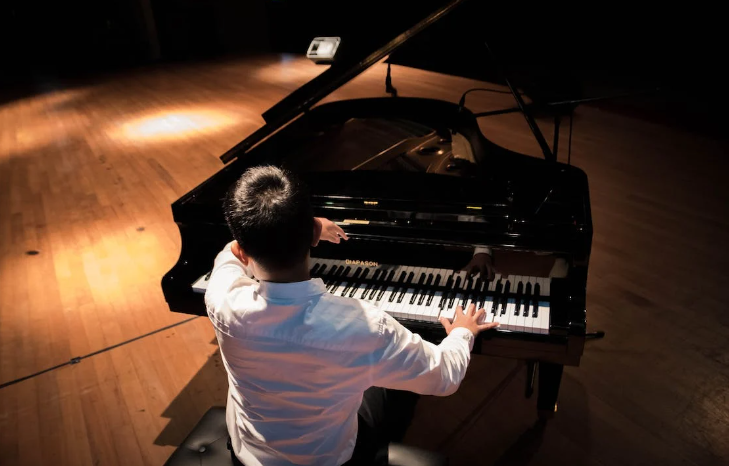
Back View Photo of a Man Playing a Black Grand Piano

How have modern blues pianists continued to innovate and push the boundaries of the genre in recent years?

The blues is a genre that has been around for over a century and has seen numerous transformations over time. One aspect of the blues that has undergone a significant change in recent years is the role of the piano. Modern blues pianists have been pushing the boundaries of the genre by infusing it with new sounds and techniques, creating a unique and fresh take on an old classic.

One of the most notable innovations in modern blues piano is the use of technology. With the advent of electronic keyboards and synthesizers, blues pianists can now create sounds that were once impossible with traditional instruments. They can use digital effects to manipulate the tone and texture of their playing, giving them a more varied palette to work with.

In addition to technology, modern blues pianists have also been incorporating other musical genres into their playing. Jazz, rock, and funk are just a few of the styles that have influenced contemporary blues piano. This blending of genres has resulted in a more diverse and exciting sound, with pianists creating new and interesting compositions that reflect their individual influences.

Another way modern blues pianists have been pushing the genre forward is through their use of unconventional techniques. Players like Ben Folds and Jon Cleary have incorporated elements of classical piano into their blues playing, resulting in a more complex and sophisticated sound. Others, like Jools Holland, have experimented with using two pianos at once, creating a unique and intricate dueling sound.

Beyond technical innovations, modern blues pianists have also been expanding the subject matter of their music. While traditional blues often focused on themes of heartbreak and loss, contemporary blues piano is exploring a wider range of emotions and experiences. Artists like Allen Toussaint and Dr. John have used their music to address political and social issues, while others like James Booker have explored more personal and introspective themes.

Perhaps most importantly, modern blues pianists have continued to keep the blues alive by passing on their knowledge and expertise to the next generation of musicians. Many contemporary players have taken on the role of teachers, passing on their skills and techniques to up-and-coming pianists. This has resulted in a growing community of young musicians who are keeping the blues alive and pushing it forward into new and exciting territory.

Modern blues pianists have continued to innovate and push the boundaries of the genre in recent years by incorporating new technologies, blending genres, using unconventional techniques, and expanding the subject matter of their music. These innovations have resulted in a fresh and exciting take on an old classic, ensuring that the blues will continue to be a vibrant and evolving genre for years to come

What influence did jazz have on the development of blues piano playing, and vice versa

Jazz and blues are two genres of music that are closely related to each other, and their influence on each other is undeniable. The blues is a style of music that originated in the African-American community in the late 19th and early 20th centuries. It is characterized by its 12-bar structure, a strong emphasis on the vocal melody, and the use of improvisation. Jazz, on the other hand, emerged from the African-American community in the early 20th century and is characterized by its improvisation, swing rhythm, and the use of syncopation.

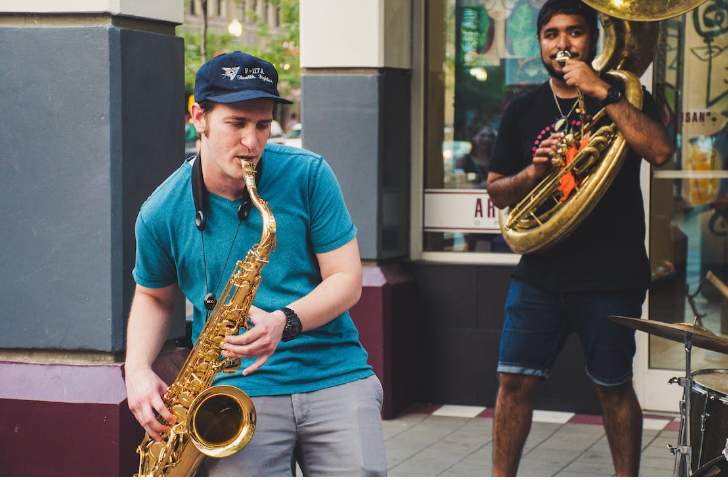
Two Men Blowing Air Instruments

The blues piano playing style is deeply rooted in the African-American musical tradition, and its development was influenced by many factors, including the cultural, social, and historical contexts of the time. In the early days of blues piano playing, the piano was often used as a solo instrument or as an accompaniment to a singer or other instruments. The piano was often played in a percussive style, with the left hand playing a bass line and the right hand playing a melody or chord progression.

The development of blues piano playing was greatly influenced by the advent of jazz in the early 20th century. Jazz piano players, such as Jelly Roll Morton, Earl Hines, and Fats Waller, were able to combine the percussive style of blues piano playing with the improvisation and syncopation of jazz. They also brought a new level of technical proficiency to the piano, which helped to expand the possibilities of blues piano playing.

One of the most important contributions of jazz to the development of blues piano playing was the concept of improvisation. Jazz pianists were known for their ability to improvise on the spot, creating new melodies and harmonies on the fly. This concept was quickly adopted by blues piano players, who began to incorporate improvisation into their playing. Improvisation allowed blues piano players to express themselves more freely and to create more complex and interesting melodies.

Jazz also had a significant impact on the rhythm of blues piano playing. Jazz musicians often used swing rhythm, which involves accenting the off-beat notes, to create a sense of forward momentum and energy in their playing. This style of rhythm was quickly adopted by blues piano players, who began to incorporate swing rhythm into their playing. This helped to give blues piano playing a more dynamic and exciting feel.

In addition to the influence of jazz on the development of blues piano playing, the blues also had a significant impact on jazz piano playing. Jazz musicians often incorporated blues elements, such as the 12-bar structure and the use of blues scales, into their playing. This helped to create a unique sound that was both bluesy and jazzy.

One of the most important contributions of the blues to jazz piano playing was the concept of the blues progression. The blues progression is a 12-bar chord progression that is used in many blues songs. Jazz musicians quickly recognized the versatility of this progression and began to use it in their own compositions. This helped to create a new genre of music, known as blues-jazz or jazz-blues, that combined the improvisation and swing rhythm of jazz with the bluesy feel of the blues.

Another important influence of the blues on jazz piano playing was the use of blue notes. Blue notes are notes that are sung or played at a slightly lower pitch than the standard note in the scale. This creates a distinctive bluesy sound that is often used in blues and jazz music. Jazz pianists began to incorporate blue notes into their playing, which helped to give jazz piano playing a more soulful and expressive feel.

The influence of jazz on the development of blues piano playing, and vice versa, is undeniable. Jazz musicians were able to bring new technical proficiency, improvisation, and swing rhythm to blues piano playing

How did the migration of African Americans from the rural South to urban centers like Chicago and Detroit impact the development of blues piano in the mid-20th century

How did the migration of African Americans from the rural South to urban centers like Chicago and Detroit impact the development of blues piano in the mid-20th century?

The Great Migration of African Americans from the rural South to urban centers in the mid-20th century had a significant impact on the development of blues piano. As they settled in cities like Chicago and Detroit, African Americans brought with them their rich musical traditions, which fused with the styles of other cultures and the urban environment to create a new sound.

The blues piano is a style of music that originated in the African American community in the early 20th century. It is characterized by its use of the piano as the primary instrument, and its focus on expressing the emotions and experiences of the performer. The style developed out of a fusion of African rhythms, gospel music, and the European classical tradition.

The migration of African Americans from the rural South to urban centers like Chicago and Detroit began in the early 1900s and continued through the mid-1960s. It was driven by a variety of factors, including the search for better economic opportunities and the desire to escape the racism and violence of the Jim Crow South. As African Americans settled in these cities, they brought with them their rich musical traditions, which had been passed down through generations.

In Chicago, the blues piano was popularized by musicians such as Roosevelt Sykes and Big Maceo Merriweather. These musicians combined the traditional blues style with the city’s urban rhythms to create a new sound that was both unique and familiar. They played in local clubs and bars, often improvising their music and incorporating new elements as they went along.

The development of blues piano in Detroit was similarly influenced by the city’s unique musical environment. Detroit was home to a thriving jazz scene, and musicians such as Earl Hines and Albert Ammons incorporated jazz elements into their blues piano playing. The result was a style of music that was more complex and sophisticated than traditional blues piano, but still retained its emotional intensity.

One of the most influential blues pianists of the mid-20th century was Muddy Waters, who moved to Chicago in the 1940s. Waters’ music combined the traditional blues style with the urban rhythms of Chicago, and his lyrics often focused on the experiences of African Americans in the city. His music was both a reflection of the city’s culture and a commentary on the social and political issues of the time.

The migration of African Americans to urban centers also had a significant impact on the way that blues piano was performed. In the rural South, the piano was often played in a solo or duo setting, with one musician playing the melody and another playing the accompaniment. In the urban centers, however, the piano was often part of a larger ensemble, which included other instruments such as the guitar and drums. This allowed for a greater variety of sounds and textures, and gave blues piano a more dynamic and complex feel.

The development of blues piano in the mid-20th century was also influenced by advances in technology. The advent of the electric piano and amplification allowed for a greater range of sounds and volumes, which further expanded the possibilities of the genre. Musicians could now experiment with different tones and effects, and the piano could be heard more clearly in larger venues.

The migration of African Americans from the rural South to urban centers like Chicago and Detroit had a profound impact on the development of blues piano in the mid-20th century. African Americans brought with them their rich musical traditions, which fused with the styles of other cultures and the urban environment to create a new sound. The blues piano became more complex and sophisticated, and was often part of a larger ensemble. Advances in technology also played a role in the development of the genre. Today, the blues piano continues to be a vital part of American music, and its influence can be heard in a wide variety of genres